Last Updated on April 28, 2026 by Sophie Wilesmith
For arable farmer Brian Bevin, blackgrass had reached a tipping point.
Farming in Leicestershire, Brian had run a conventional combinable crop rotation of wheat, barley and oats. But over time, blackgrass pressure intensified to the extent that some fields were no longer worth harvesting.
“It got so bad we were leaving crops in the ground,” he recalls. “At that point, you have to make a decision, carry on and struggle, or change direction.”
Faced with that reality, Brian considered his options. A move into grass and sheep was one route, while alternative cropping systems were also suggested.
“Spring barley was mentioned, but that’s really just living with the problem, not solving it,” he says. “And with the input costs involved, the margins were tight. It just didn’t stack up.”
Instead, Brian turned to Miscanthus. “It offered something different, low input, more control, and a crop that could work with the land rather than against it.”
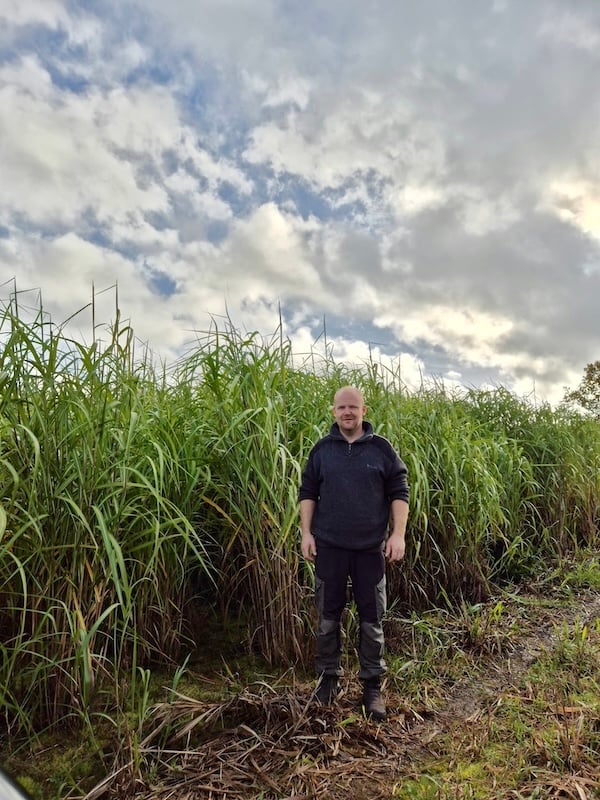
Starting in 2017, Brian planted an initial 60 acres of Miscanthus, before expanding to 100 acres and transitioning the farm entirely out of conventional arable production.
He explains that establishment wasn’t without its challenges. “In the early stages, the crop was swamped with blackgrass,” he says. “It takes two years to fully establish, and that’s probably the hardest part.”
But patience paid off. After two years, the first harvest was taken, and from that point on, the crop steadily strengthened. “In 2025, we harvested 600 bales which is equivalent of around 6.7 t/ha and this year it was around 7.3 t/ha,” he says.
“Year by year, it’s improved. Now, the Miscanthus completely outcompetes the
blackgrass and it’s no longer an issue,” says Brian.
The transformation has been particularly notable on the farm’s heavier land.
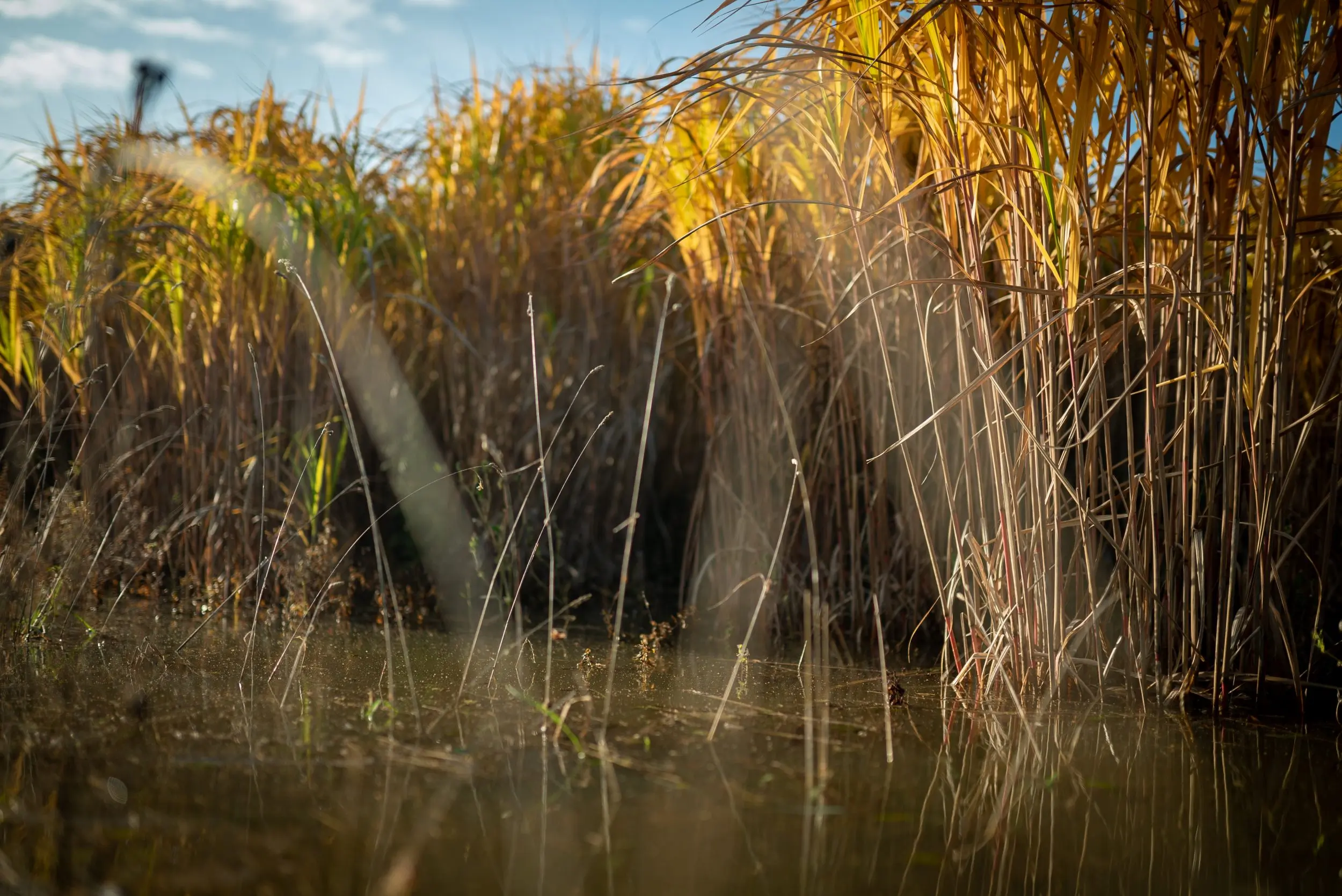
“A lot of our ground is heavy clay and prone to waterlogging,” Brian says. “It’s flat and slow to drain, which never helped with cereals. But Miscanthus has handled it well.”
While it took around five years to reach full economic viability, the system now delivers consistent returns with minimal intervention.
“There are no variable costs once it’s established, no fertiliser, no sprays. We take a harvest every year, and it takes care of itself because it’s a hardy perennial.”
Yields have also shown a steady upward trend. From more modest early harvests, the crop is now producing significantly higher volumes.
Beyond blackgrass control, Brian highlights wider benefits. “It’s improved soil structure, it stores carbon, and it takes away the exposure to rising input costs. “You’re not worrying about fertiliser or chemical prices.”
Harvesting is handled by contractors, who cut, bale and load the crop for collection. One lesson learned has been the importance of storage and logistics.
“You need to move it quickly if you don’t have storage. We had a year where some bales got wet and we lost them, so that’s something to plan for.”
Brian works with Terravesta, a specialist in Miscanthus supply chains, to market the crop into renewable energy markets, including renewable power generation.
“Terravesta manages the end market and logistics, which makes it straightforward. You know where the crop is going, and it gives you confidence in the system.”
Looking back, Brian is clear about the decision.“We’ve learned a lot along the way, but overall, I’d definitely do it again. On this type of land, with that level of blackgrass pressure, Miscanthus is the only thing that’s really worked.”
For a farm once constrained by weed burden and rising costs, the switch has delivered something increasingly valuable in modern agriculture: simplicity, stability and long-term viability.